Skip to content
0:00 / 0:00

#voyager2#deepspacenetwork#dss43

How To Contact The Voyager 2 Probe (PART 1)

EEVdiscover

33K subscribers • 1 video on Hallway

YouTube
  • Recommended by 2 people: 2 on Hacker News.
  • A classic. People kept recommending it from 2018 to 2023.
  • Presented by Richard Stephenson, Operations Supervisor at the Canberra Deep Space Communication Complex

Beginner. No background in the topic needed.

93K views9 years ago2 recommendations

HardwareHistory and cultureElectronicsNetworking and protocolsRetro computing

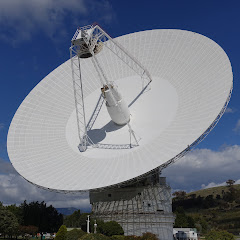
Richard Stephenson and Dave Jones tour the DSS43 dish in Canberra to explain how NASA communicates with the Voyager 2 spacecraft.

Detailed look at how the 70m DSS43 NASA Canberra Deep Space dish is used to talk to the Voyager 2 probe 17 billion km from earth. Part of the NASA/CSIRO Deep Space Communications Complex at Tidbinbilla in Canberra Australia. Huge thanks to Richard Stephenson who stayed back after a 12 hour night shift to record this! Twitter: @nascom1 cdscc.nasa.gov/Pages/people2.html Tech details on the communications: descanso.jpl.nasa.gov/DPSummary/Descanso4--Voyager_new.pdf PART 2: youtube.com/watch?v=1rCrfQUcXDI Forum: eevblog.com/forum/eevdiscover/voyager-2-contact/ #NASA #Voyager #DeepSpace

Why it's here

2 people recommend this

What people say. Recommended for its fascinating look into the hardware and engineering behind deep space communications with the Voyager probes.

misterSon Hacker News • Recommends

On “Deep Space Network Now: Status of communications with our deep space explorers”

Dave Jones of EEVBlog has a nice series of videos talking to Richard Stephenson, Operations Supervisor at the DSN's Canberra site. How To Contact The Voyager 2 Probe: Part 1: link to this video Part 2: link Part 3: link (the playlist is a mess, and videos are unordered) There are also a couple of Behinde the Scenes videos.

7373737373on Hacker News • Recommends

On “NASA Power Hack Extends 45-Year Voyager 2 Mission Even Longer”

Video recommendation: How To Contact The Voyager 2 Probe ( link to this video ) and Pinging The Voyager 2 Probe ( link ) by EEVDiscover

InclinedPlaneon Hacker News • Mentions

On “After 37 years, Voyager has fired up its trajectory thrusters”

There are high gain antennas on both ends, and use of error correcting codes, as well as extremely high grade low noise amplifiers on the Earth side. The Voyagers have a 3.7m diameter parabolic radio dish, larger than the Hubble space telescope's mirror even. That alone provides a huge amount of gain on communications. Additionally, the spacecraft have 10s of watts of power available for transmitting signals, which is a fair bit considering (while on the other end the ground stations have up to hundreds of thousands of watts to transmit). The ground-stations in the deep space network (DSN) are tens of meters across, a small antenna is 34m, the biggest ones are 70m across. That also provides…

ncolon Hacker News • Mentions

On “JPL Open-Source Rover Project Based on the Rovers on Mars”

Haven't worked in this field, but here are some episodes discussing the topic: link link link link link link to this video I think what you are talking about is mostly just normal engineering in the sense that the process is similar. What really makes space unique isn't space as such but that there is no real-world (real-space?) testing, no inspections after the fact or do-overs.

_trampeltieron Hacker News • Mentions

On “Voyager 2 is back online after eight months of radio silence”

Yes, there was even some new lately. "Voyager Spacecraft Detect an Increase in The Density of Space Outside The Solar System" link Dave Jones made a coupe of videos about the Deep Space Station in Canberra. link to this video

mk_stjameson Hacker News • Mentions

On “NASA tries to jog Voyager 1's memory from 15B miles away”

…the Voyager probes is 'only' 3.7 meters. Still... not a cell phone antenna. That said, the transmit power of the Voyagers is tiny in comparison to ours and it is closer to that of the cell phone analogy- still more, however, at about 23 watts 1. So, our end task of receiving that, by the time it gets to us, is damn impressive indeed I think. 0 link to this video 1 link…