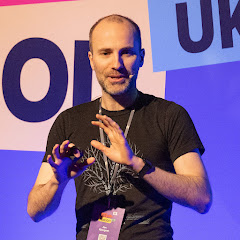
Jon Gjengset delivers a guest lecture at MIT on the threats, vulnerabilities, and mitigation strategies in modern software supply chains.
This is a recording of a guest lecture I gave in MIT's 6.5660 Computer Security class (formerly 6.858) in May of 2023: css.csail.mit.edu/6.858/2023/ about supply chain security.
You can find the slides at jon.thesquareplanet.com/slides/6.5660-supply-chain-security-… (PDF: jon.thesquareplanet.com/slides/6.5660-supply-chain-security-…). The speaker notes have links to the original sources.
In the talk, I mention a list of people I'd recommend following. You can find that below. I generally link to people's websites where there is one so students can find the appropriate social media profile (or subscribe to blogs where applicable). The websites are often unimpressive or dated — prefer the social media channels where possible, as those are more likely to surface things written by _other_ security folks that then get boosted by these people.
infosec.exchange/@SwiftOnSecurityblog.cryptographyengineering.com/filippo.io/lock.cmpxchg8b.com/infosec.exchange/@tqbfscarybeastsecurity.blogspot.com/securitycryptographywhatever.com/ioc.exchange/@durumcrustulummoxie.org/blog/twitter.com/troyhunttwitter.com/EdgeSecuritythomasdullien.github.io/about/twitter.com/lavados
This list is entirely subjective, biased, and will likely seem like an entirely random sample to many security folks. Many of the people on this list disagree with each other frequently. Many people should be on the list but aren't. And I'm sure some of them should be substituted for others that I forget right now. These are also people I've accumulated over the years, so there are almost certainly some that are less active in the security space now than they were, or have changed what they write about since when I first started following them. But hopefully it's a useful seed for finding more security content!
As for the question about "favorite attack" where I answer "near-miss hash collisions", here's one such example: twitter.com/David3141593/status/1648458205171953664.
Chapters:
Lecture
Q&A
Does Amazon publish SBOMs?
What's your favorite kind of attack?
Why is it hard to know where things come from?
Advice for making a career in security
Does Amazon use SBOMs internally, and how big do they get?
Are supply chain security detected faster?
Can supply chain attacks be targeted?
How valuable is a PhD for a career in security?
What types of companies are looking for security engineers?
Useful classes/skills for a career in security?
What's your preferred text editor?
Why it's here
2 people recommend this
What people say. Recommended as an excellent, comprehensive lecture on software supply chain security.
H
u/Handsomefoxhfin r/programming • Recommends
On “Stay Alert: The Rising Threat of Malicious Extensions in Microsoft's VSCode Marketplace”
…good for writing useful extensions, but its too open and naive and we just rely on the extension author to not do anything bad. The same can be said about software supply chains, we just rely on the library author and the website that's hosting the dependency to not do anything bad. I really enjoyed this talk about software supply chain security: link to this video
Maybe a good "permission manager" for extensions would be an interesting idea, something that looks like Android's permission system, so that you can control and see beforehand anything the extension wants to do without having to read through its code. Couple that with at least some level of submission verification like app stores on smart…
On “(Why) is a toy password manager a too complex summer project?”
Bots can affect download numbers, and a security crate with a vulnerability would be a good target for that.
A marginally better metric would be how many crates depend on it, but not really, unless the dependors are high-profile big projects. Obviously if the crate itself were so then that would be best.
link to this video - this is a MIT lecture on supply chain security, I highly recommend this channel, lots of advanced Rust topics