Skip to content
0:00 / 0:00

#sketchpad#ivansutherland#gui

Ivan Sutherland Sketchpad Demo 1963

Interface Studies

18K subscribers • 1 video on Hallway

YouTube
  • Recommended by 5 people: 5 on Hacker News.
  • A classic. People kept recommending it from 2016 to 2025.
  • Presented by Ivan Sutherland

Beginner. No background in the topic needed.

136K views14 years ago5 recommendations

Graphics and audioHistory and cultureRenderingHistory of computingPeople who shaped computing

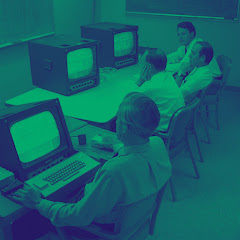
Ivan Sutherland demonstrates Sketchpad, his revolutionary 1963 graphical computer-aided design system running on the TX-2 computer.

Watch now: History of The Graphical User Interface (GUI): A Wonderful Curse youtu.be/fHMPGhezj0s?si=DuBg3tOL_hiEG7sY This video is a TV show made about the software Ivan Sutherland developed in his 1963 thesis at MIT's Lincoln Labs, "Sketchpad, A Man-Machine Graphical Communication System", described as one of the most influential computer programs ever written. This work was seminal in Human-Computer Interaction, Graphics and Graphical User Interfaces (GUIs), Computer Aided Design (CAD), and contraint/object-oriented programming. While watching this video, remember that the TX-2 computer (built circa 1958) on which the software ran was built from discrete transistors (not integrated circuits -it was room-sized) and contained just 64K of 36-bit words (~272k bytes). mskayyali.com

Why it's here

5 people recommend this

What people say. Recommended as a mind-blowing historical demonstration of the foundations of graphical user interfaces, CAD, and constraint-based object-oriented graphics.

i336_on Hacker News • Recommends

On “Computer Vision in 1982 Using Altair Computers and a Cromemco Cyclops Camera”

TL;DR: If you share the sentiment of the parent commentator you may find this wall of text interesting. You might be interested in Alan Kay's "Doing with Images Makes Symbols Pt 1", link (46:29). This video features excerpts from Ivan Sutherland's Sketchpad demo ( link , 10:34; link to this video , 19:19) and Douglas Englebart's seminal demonstration ( link , 34:45). I recommend watching all the videos in full to get a proper sense of context (Alan Kay's excerpts from Douglas's demonstration particularly don't include the bits that explain how the workstation's camera system works, which is important; also, the right audio channel in the Alan Kay video unfortunately seems to be dead, while the ot…

ivanmaederon Hacker News • Recommends

On “Ask HN: What are some of the best technical talks you've heard?”

Demo of Ivan Sutherland's 1963 Sketchpad: link to this video It was a drawing app with the following features: Snap to object ("This allows me to be sloppy while I'm drawing and get a precision drawing at the same time"), connected vectors, arcs, alignment with other objects, copying, multiple "files," scaling ("It scales approximately 2 miles in size"), 3D, etc etc It blows me away that this kind of UI was even conceived in the 1960s. It feels like there was a dark ages middle period after then until quite recently.

infinite8son Hacker News • Recommends

On “Alan Kay on the misunderstanding of OOP (1998)”

Here are 2 that he often brings up: Ivan Sutherland's Sketchpad demo - Object oriented graphics using a constraint based system ( link to this video ) Douglas Englebart's demo - too many innovations to list, but includes real time collaboration (he demoed in a convention center while the system ran 30 miles away in his lab, connected by a leased line operating at 1200 baud!). People think he just invented the mouse, but the overarching theme in his work was augmenting human capabilities... link

ralferooon Hacker News • Recommends

On “Igneous Linearizer: semi-structured source code”

I remember reading an article on Source Code In Database back in the early 2000s, and it's been knocking around my brain ever since as something I ponder every couple of years. I just can't shake the feeling that there's the gem of a future paradigm where everyone wonders "why we didn't always do it that way?", but then every time I try to follow those thoughts through to a conclusion, it always feels like it'd just be re-implementing Smalltalk, and then the question is "why isn't Smalltalk more popular?" That said, there's a lot to be said for revisiting old ideas. There was so much interesting research done in the 60s and 70s in all sorts of random directions, maybe because at that time th…

a1371on Hacker News • Recommends

On “The man with a Home Computer (1967) [video]”

I don't know if it's selection/survivor bias, but every time I watch a video about computers from the 60s and 70s, I am amazed how spot on they are with the trajectory of the technology. Take this CAD demo from MIT back in 1963 showing features that I commonly use today: link to this video Then the 80s and 90s rolled in, the concept is computers that entered the mainstream. Imagination got too wild with movies like Electric Dreams (1984). Videos like this make me think that our predictions of AI super intelligence are probably pretty accurate. But just like this machine, in actuality it may look different.

u/github-alphapapain r/emacs • Mentions

OT, video Visual, stylus-based schematic programming with interactive, stepping debugger (1966) I just stumbled upon this video which reminds me of Englebart's "mother of all demos" video: link to this video It shows the building of a square-root program by drawing schematics on a screen with a stylus. The step-by-step debugger is shown at around the 9:00 mark. All this from 1966! How far have we really come? And I wonder what the equivalent pioneers of this age are working on... I hesitated to share it here, but it has very few views on YouTube, and I'm guessing it will be very interesting to readers here. Also see this similar video: link to this video

Animatson Hacker News • Mentions

On “What made Xerox PARC special? Who else today is like them?”

"You know what makes the rockets fly? Funding." - The Right Stuff. What really made PARC work is that they were funded to develop the future of computing by building machines which were not cost-effective. It was too early in the mid-1970s to develop a commercially viable personal workstation. But it was possible to do it if you didn't have to make it cost-effective. That's what I was told when I got a tour of PARC in 1975. They had the Alto sort of working, (the custom CRT making wasn't going well; the phosphor coating wasn't uniform yet) the first Ethernet up, a disk server, and I think the first Dover laser printer. All that gear cost maybe 10x what the market would pay for it. But that w…

gambleron Hacker News • Mentions

On “Visual Programming – Why It’s a Bad Idea”

There is more to visual programming than simple wire diagrams and "code-blocks-as-visual-blocks": link to this video link link link And yes, this: link This is not 100% real programming, because it does not include sensors, but you do create constructs that interact with the environment and accomplish goals. It's close enough to show what's possible with certain interfaces. Long-term: link There have been much fewer resources allocated to the development of these concepts. Mostly for historic reasons. The sad reality is that both critics and proponents of visual programming are often uninformed about prior work, user studies and related research rooted in cognitive and developmental psycholog…

efortison Hacker News • Mentions

On “Ask HN: Any solution to smooth line drawings, maybe converts to bezier?”

From hn.algolia.com: link --- In Inkscape (Illustrator, Draw, ...): link --- For tracing there are many tools as well, e.g. FlexiSIGN, link --- For a use case, see Ivan Sutherland's Sketchpad Demo: link to this video

GeekyBearon Hacker News • Mentions

On “The Xerox Thieves: Steve Jobs and Bill Gates [video]”

People always seem to forget that Xerox borrowed a lot of ideas themselves. Douglas Englebart at Stanford Research Institute gets credit for many innovations, including the mouse. The infamous "mother of all demos" can be seen here: link Going back to the early 60's, there was an equally famous GUI demonstration at MIT, using a light pen instead of a mouse as a user input device for rudimentary CAD. link to this video Finally, anybody who claims that the Mac or Windows was nothing but a copy of the Alto has never seen an Alto in action. link

DonHopkinson Hacker News • Mentions

On “Spreadsheets are all you need”

Many visual programming languages don't necessarily display a connected graph of nodes, or explicit visual code beyond the data you're acting on. What many people don't realize about visual programming languages is that there are so many of them that look and behave extremely differently than the few recent and popular ones they might have actually seen and used, like Unreal Blueprints. People have been inventing wildly diverse VPLs for a long time, and there is no one standard visual design (like graphs with boxes and arrows, interlocking blocks, text, images, etc) or execution model (like data flow, control flow, cellular automata, constraints) or interface style (like keyboard, mouse, dia…

DonHopkinson Hacker News • Mentions

On “Spreadsheets are all you need”

…link] Ivan Sutherland's pioneering PhD thesis "Sketchpad" didn't show code or formulas or constraints on the screen all the time either, focusing on the graphical content itself that you were creating and editing and programming with direct manipulation, demonstration, and constraints, instead of just the code. Ivan Sutherland Sketchpad Demo 1963: link to this video >This video is a TV show made about the software Ivan Sutherland developed in his 1963 thesis at MIT's Lincoln Labs, "Sketchpad, A Man-Machine Graphical Communication System", described as one of the most influential computer programs ever written. This work was seminal in Human-Computer Interaction, Graphics and Graphical User Interfaces (…

AfterHIAon Hacker News • Mentions

On “The Programmer Identity Crisis”

…for a big paradigm shift in how we interact with computers for decades at this point. SketchPad let us do competent, constraints based mathematics with images. Video games and the Logo language demonstrate the potential for programming using, "kinetics." In the future we won't code with symbols we'll dance our intent into and through the machine. link to this video link link…

leocon Hacker News • Mentions

On “Ivan Sutherland Sketchpad Demo 1963 [video]”

The first demonstrator here is Timothy E. Johnson, not Ivan Sutherland. Johnson did the "Sketchpad III" work extending Sketchpad into 3D which is demonstrated from 11:30 link to this video . Then Larry Roberts appears to demonstrate his own work on hidden-line removal, which is shown from 14:42 link to this video . See link for more video, including appearances by Sutherland himself. link is an active effort to get Sketchpad running again on a new TX-2 emulator.

u/gem_hoarderin r/softwarearchitecture • Mentions

On “The place UML has in the modern world.”

There was a time when people honestly believed and pursued the idea that designing UML diagrams and having code generated from them is a good way to build software. That’s why they are so well defined and complex, because attempts were made and as roadblocks appeared in ever more complex designs they tried to patch them by more standardisation. If you look hard enough, the idea that you could just sketch out an idea and have that be “the program” isn’t new. Just check out this video of Sketchpad from 1963 (about 17 min in if you’re impatient). We went from that, to UML, to low-code/no-code tools and nowadays AI, all with the same goal of making programming easier for business people. S…